
Beyong Liquid Cooling with Paul Mah and Ming Ping Lim
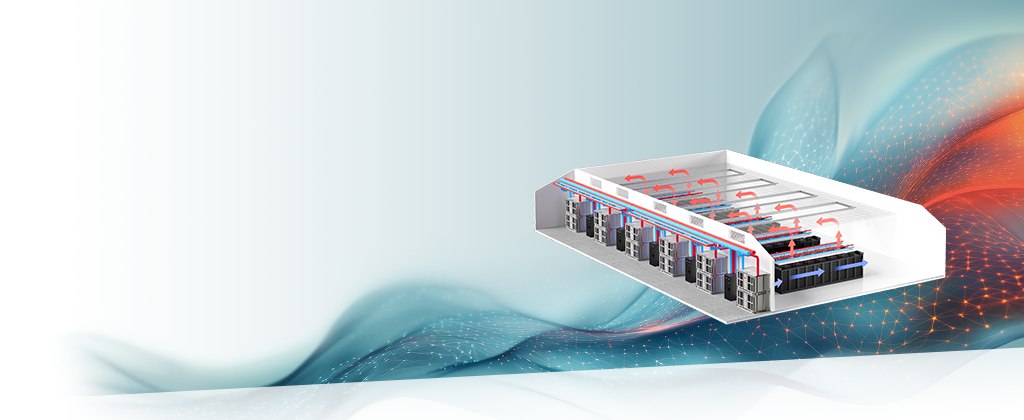
Delivering End-to-End Cooling Solutions for AI-Ready Data Centers
Recorded live at W.Media's Malaysia Cloud & Datacenter Convention 2026, this exclusive Episode 75 features Ming Ping Lim, Head of Application Engineering – APAC at STULZ Asia Hub, in conversation with Paul Mah, Executive Editor at W.Media, exploring how hybrid cooling is reshaping thermal management for high-density data centers.
Can't listen? Read the full transcript below:
Paul Mah: Hello, Ming Ping. Thank you very much for joining us today. Could you tell us a little more about yourself and your role at STULZ?
Ming Ping Lim: Thank you very much for having me, Paul. My name is Ming Ping, and I head up the team that handles pre-sales application engineering for STULZ. We develop the technical solutions for our products. STULZ is a cooling manufacturer specializing in data center cooling – air cooling and liquid cooling, which I think we'll touch on. My team works with consultants, end users and design engineers to find the right solution for their data centers.
Paul Mah: Incredible. Liquid cooling has dominated conversations across the globe – everywhere, we talk about it. But where does hybrid cooling, a mixture of liquid cooling and air cooling, fit into this transition to liquid cooling?
Ming Ping Lim: That's a very good question. Back in the day, it was basically just air cooling – it had been air cooling for years. But as loads have gone up, they've reached a point where air cooling can no longer support that level of cooling. That's why we've transitioned to liquid cooling.
That being said, even with the latest liquid-cooled racks we see from NVIDIA, there is always still a percentage of air cooling. To give an example, with 150-kilowatt GB300 racks, we're still looking at 15% - 20% air cooling. That comes to around 20 kilowatts of air cooling per rack. That's why, even in a liquid-cooled data center, the first question I always ask is: how much air do you actually need? Do you still need air? You do. That's where hybrid cooling comes into play – a mixture of the two.
Paul Mah: Very interesting, because 15% of a big number is still a very big number.
Ming Ping Lim: Yes, exactly.
Paul Mah: My next question is this: what sets STULZ apart when it comes to liquid cooling?
Ming Ping Lim: STULZ is a little bit special. For those who may not know, we're a family-owned business, and Mr Stulz is very much involved day to day. We have always engineered our own products. We have a very strong engineering team at our headquarters in Hamburg, Germany, and we've taken the long, tough journey of doing our own R&D. We have people working hands-on on the nitty-gritty details – the pumps, the heat exchangers, the piping. So our team knows the pros and cons of our solutions, and we're very familiar with our products. Additionally, STULZ is a dedicated cooling company. We live, eat and breathe cooling. We don't do anything else – just cooling. So I'd say we're the cooling experts in this field, and that's our core difference. We know our stuff – cooling.
Paul Mah: Speaking of you as a cooling expert, I understand STULZ recently designed a new chiller series specifically to meet the cooling demands of the APAC data center market, which is quite different. What prompted this, and what advantages does it offer?
Ming Ping Lim: That's another good question. Data center cooling is very broad – it's end to end. You start on the inside with air cooling: the racks need to be cooled, that heat needs to go somewhere, and eventually it goes to the chiller. When we talk to customers about liquid cooling or air cooling, we've started hearing a lot of questions like, "Why don't you look at the chillers as well?" Chillers aren't new to us. We've been selling a lot of free cooling chillers and adiabatic chillers in Europe. But now that the APAC market is booming so quickly, we've started developing what we call the Asia chiller. It's dedicated to Asia – suited to the Asian climate and the Asian market. So now we have an end-to-end solution.
Paul Mah: So you could say that from the data hall all the way outside, you offer complete end-to-end cooling.
Ming Ping Lim: Yes, all the air cooling and liquid cooling, a lot in between, and now ultimately the chillers as well.
Paul Mah: If I were to ask you for advice for operators building or expanding data halls for high-density workloads, beyond the usual 8, 10 or 20 kilowatts, what would you tell them?
Ming Ping Lim: This is a very interesting point, because it might be a surprising answer. Something that has recently caused a lot of headaches is the supply chain. It's there, but it's not really talked about. To deliver a 1-MW site, you might need 10 units of certain equipment. But for a 100-MW site, it's a thousand pieces of equipment. All of that runs through our factories and production, and honestly, production isn't expanding as fast as demand, unfortunately. It's a bit of a chicken-and-egg situation. We're trying to expand quickly as well, but this is something a lot of operators need to plan for. I always tell my customers: unfortunately, it's first come, first served. Whoever places the order, we lock in the production, and then we're good to go. But there is a real challenge in the supply chain right now.
Paul Mah: So what you're saying is that you need to take the supply chain into consideration, because it's not just a matter of buying more – it's making sure there's adequate supply.
Ming Ping Lim: Exactly. It all comes down to scale. People used to build 10MW sites, and that was fine. Now it's easily 100MW, or even gigawatts, sites today are measured in GW, so the number of units has gone up enormously as well.
Paul Mah: Awesome. Thank you so much for your time today. I appreciate it.
Ming Ping Lim: Thank you very much, Paul. Nice to chat with you.